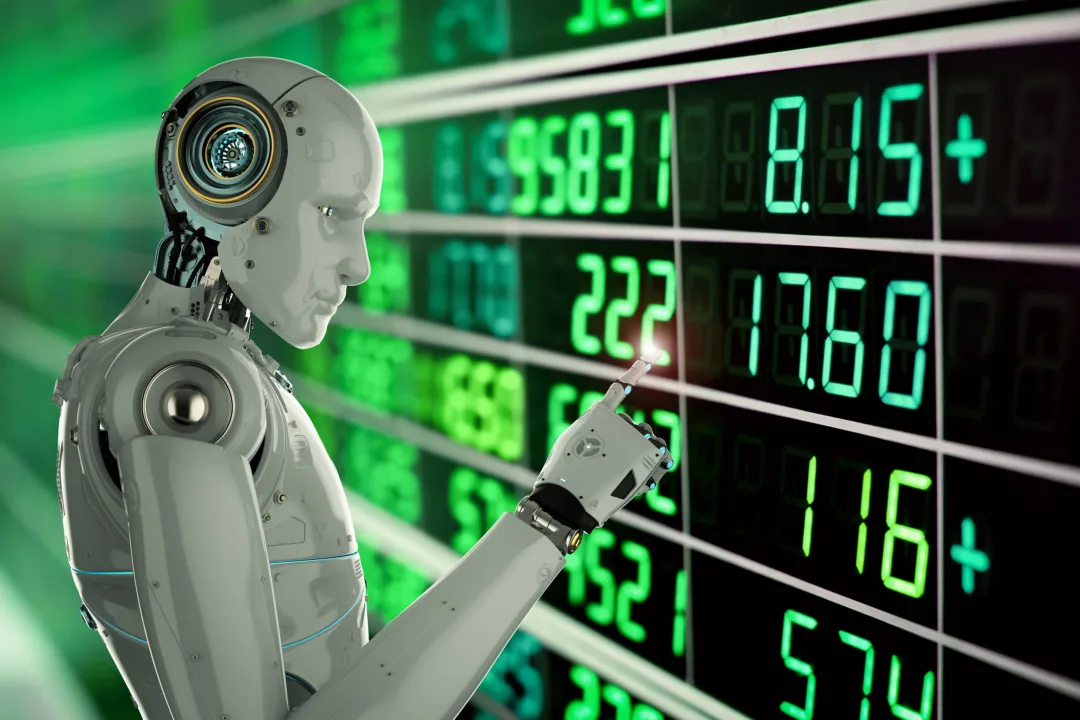
Artificial Intelligence is fundamentally re-engineering the financial sector, shifting it from a retrospective, analysis-heavy industry to a predictive, autonomous one. By 2025, AI’s impact has matured beyond experimental chatbots to become the core operational engine for major institutions. In investing, Generative AI now creates “digital twins” of markets to stress-test portfolios against infinite scenarios. In trading, algorithms dominate 70% of complex derivatives markets, executing strategies in microseconds. In fraud prevention, the battle has escalated to an “AI vs. AI” arms race, where banks use behavioral biometrics to counter deepfake-enabled theft.
1. Investing: The Rise of “Hyper-Personalized” Portfolios
AI has democratized sophisticated wealth management, making strategies previously reserved for billionaires available to retail investors.
- Generative AI for Scenario Planning:
Advanced firms now use Generative AI to simulate macroeconomic events rather than just analyzing history. For example, Quantum Capital integrated a GenAI platform to simulate thousands of potential market scenarios (e.g., a sudden 2025 oil crisis), resulting in a 35% improvement in portfolio performance compared to benchmarks. - Next-Generation Robo-Advisors:
Robo-advisors have evolved from simple “set it and forget it” rebalancing tools to active managers. Platforms like Finpilot use AI to dynamically adjust to an individual’s life changes—such as a new job or buying a house—in real-time. Users following these AI-generated strategies have seen 18% higher returns than self-directed investors. - Unstructured Data Analysis:
AI models now ingest “alternative data” at scale—satellite imagery of retail parking lots, shipping container traffic, and CEO tone analysis during earnings calls—to predict stock performance weeks before official financial reports are released.
2. Trading: Speed, Sentiment, and “Shallow Quants”
In the trading world, the advantage has shifted from human intuition to algorithmic speed and pattern recognition.
- High-Frequency Trading (HFT) & Latency:
AI algorithms now execute trades in microseconds, capitalizing on fleeting inefficiencies. On major exchanges like India’s NSE, AI-driven systems now influence 70% of equity derivatives turnover. These systems minimize “slippage” (the difference between expected and actual price) by breaking large orders into thousands of micro-trades that hide intent from other algorithms. - Sentiment Analysis & NLP:
Natural Language Processing (NLP) tools scan millions of news articles, Reddit threads, and regulatory filings instantly. If a CEO mentions “supply chain headwinds” in a filing, the AI can short the stock before a human analyst finishes reading the sentence. - The “Shallow Quant” Risk:
A growing risk in 2025 is the rise of “shallow quants”—traders using powerful AI tools they don’t fully understand. Experts warn this could lead to “LTCM-style blowups,” where opaque “black box” AI models all herd into the same crowded trade, causing massive volatility when the trend reverses.
3. Fraud Prevention: The “AI vs. AI” Arms Race
This is the most critical battlefield. As criminals use AI to create deepfakes and polymorphic malware, banks are forced to deploy AI defenses that are faster and smarter.
- Behavioral Biometrics (Continuous Authentication):
Passwords are no longer sufficient. AI systems now build a “behavioral profile” for every user—analyzing typing speed, mouse movements, and even how a user holds their phone. - Real-Time Anomaly Detection:
Legacy systems looked for simple rules (e.g., “transaction > $10,000”). AI looks for contextual anomalies. If a customer who usually buys coffee at 8 AM suddenly transfers funds to a crypto wallet at 3 AM, the AI flags it instantly. - Anti-Money Laundering (AML):
AI systems like HSBC’s Dynamic Risk Assessment analyze 1.35 billion transactions monthly to map hidden networks of money laundering that human investigators would never see. This system identifies 2-4x more financial crimes than previous manual methods.
Summary of Key Impacts (2025)
Challenges & Risks
Despite the benefits, the sector faces “Black Box” capability risks. Regulators in the EU and US are struggling to audit AI models that make decisions no human can explain. There is a real fear that “hallucinations” in financial advice or herd mentality in trading algorithms could trigger systemic market failures before regulators can intervene.